
Antique Identifier, Appraisal
Brite Technologies LLCEducation
4.6233.00 Reviews
- Version
- 3.0.0
- Installs
- 100.00K
- Age Rating
- Everyone
Screenshots
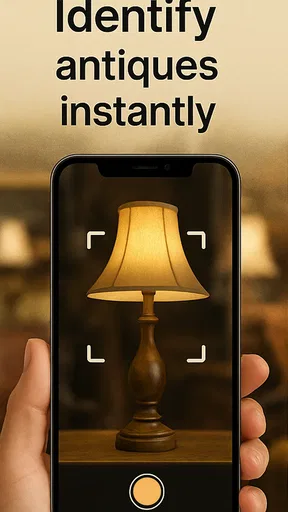
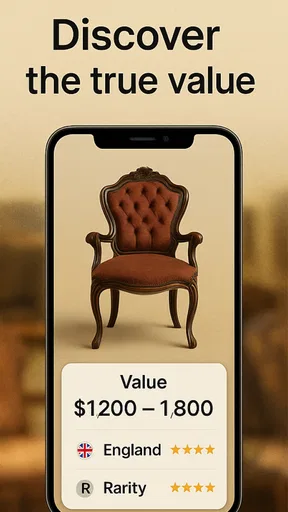
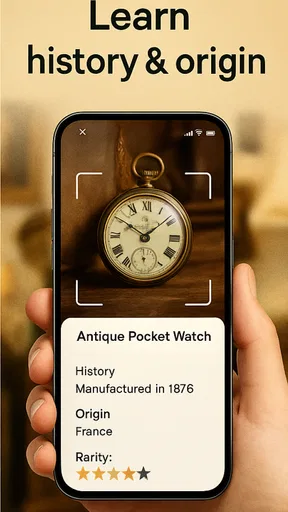
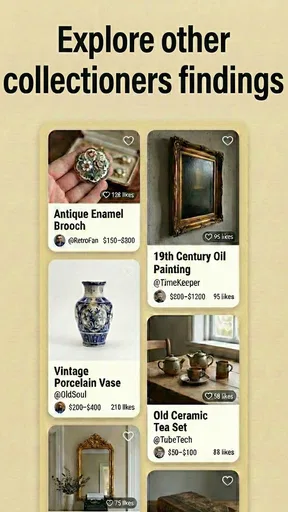
Our Review of Antique Identifier, Appraisal
 Analysis by Appyee
I came away from Antique Identifier, Appraisal with a clear impression: it is most useful as a fast first opinion, not as a replacement for a professional appraiser. The idea is simple and appealing. I can photograph an antique, piece of jewelry, or vintage object and use the app to get an initial identification and value-oriented context without starting with a long web search. That makes it especially handy when I am standing in a thrift shop, sorting through a family collection, or trying to understand an unfamiliar object on a shelf.
What makes the app worth trying is the combination of convenience and curiosity. It belongs to the education category, is free to install, and is suitable for everyone. Brite Technologies LLC is the developer, and the app has built a 4.6 average from around 5.6 thousand ratings, with more than 100 thousand installs. Those figures suggest that the basic concept is easy for ordinary users to understand, even if the results still need sensible interpretation.
How Antique Identifier, Appraisal works in everyday use
I find the most useful way to approach this app is to treat a scan as the beginning of a small investigation, not its conclusion. Before I open it, I decide what I need to learn: a likely object type, clues to inspect, or whether an item deserves expert attention. That keeps the result in perspective and helps me move naturally from everyday use to the choices that suit different kinds of research.
A useful starting point for unfamiliar objects
The natural workflow is to photograph an item and let the app help narrow down what you are looking at. That is valuable because many objects are difficult to describe in words. A brooch may have a particular clasp, a vase may carry a faint mark, and a piece of furniture may combine details from several periods. A visual tool can give me a direction much faster than guessing search terms.
I would use it first when I know very little about an object. Rather than asking, “What is this exact item worth?” I would begin with questions such as, “What kind of object is this?” or “Which details should I investigate next?” That change in mindset matters. Identification is often a process of narrowing possibilities, while appraisal depends on condition, authenticity, provenance, materials, and the current market.
The store summary presents the app as a way to snap and identify antiques, jewelry, and vintage items while discovering value quickly. In practice, the most responsible way to read that promise is as an initial screening tool. It can help separate an obviously common decorative object from something that deserves closer attention, but a photograph alone should not be treated as final proof of rarity or price.
Better results begin before the camera opens
The quality of the photograph has a major effect on the usefulness of any visual identification app. I would place the object on a plain surface, use even light, and avoid reflections on glass, polished metal, or gemstones. One clear overall image is helpful, but close views of signatures, stamps, hallmarks, joinery, clasps, labels, and damage are often more informative than another distant picture.
A practical workflow is to photograph the item in stages. I would first capture its full shape, then take separate images of the front, back, underside, and any markings. For jewelry, I would include the setting, fastener, stone placement, and metal marks. For ceramics, I would photograph the base and any painted or impressed symbol. For furniture, construction details and wear patterns may matter more than the front view.
This is one of the app’s less obvious strengths: it encourages me to look closely. Even if the first result is broad, the act of preparing better images can reveal evidence I might otherwise overlook. A faint maker’s mark or an unusual repair may be more important than the object’s general appearance.
Where the value estimate needs careful handling
Value is the part that requires the most restraint. Two objects that look nearly identical can sell for very different amounts because one is authentic, complete, documented, or in excellent condition while the other is restored, damaged, reproduced, or missing a component. A visual estimate may be useful for deciding whether further research is worthwhile, but it cannot automatically establish what a dealer, auction house, or private buyer will actually pay.
I would also avoid treating a high-looking estimate as a reason to clean an object immediately. Polishing silver, removing old finishes, replacing hardware, or washing textiles can destroy useful evidence and sometimes reduce collector interest. My preferred workflow is to identify first, document the condition, and only then consider professional advice. The app is most helpful at the beginning of that chain, before an impulsive repair changes the item.
For a family estate, I would use it to organize questions rather than assign final prices. Photograph each object, note where it came from, record visible damage, and keep any old receipts or labels. The resulting information can make a later conversation with an expert much more efficient. It also prevents a common mistake: remembering only the most exciting possibility while forgetting the details that support or weaken it.
The strongest reason to keep it installed
My strongest reason for recommending the app is speed. Traditional research can be rewarding, but it often begins with uncertainty. I may not know whether an item is a vase, a commemorative object, a particular jewelry style, or a later reproduction. A quick visual assessment gives me vocabulary and possible directions for the next step.
That is particularly useful during secondhand shopping. If I find an unfamiliar brooch at a charity shop, I can inspect its construction and markings, take a careful image, and use the app as a preliminary filter before deciding whether to spend more time researching it. I would not expect an instant bargain guarantee, but I would value the ability to turn a vague hunch into a more focused investigation.
The same applies to inherited objects. A person clearing a relative’s home may face dozens of items with no context. It is unrealistic to seek a specialist opinion for every plate, necklace, clock, or decorative figure. A first-pass tool can help create a shortlist: ordinary household pieces can be cataloged quickly, while unusual or potentially significant objects can be set aside for deeper examination.
What it does better than ordinary searching
Compared with a normal search engine, the app removes some of the pressure to know the right words. Searching for “old gold necklace” produces an enormous range of possibilities, while a photograph can at least begin with the object’s visible form. That makes the app friendlier for beginners who do not yet know the vocabulary of collecting.
Compared with collector forums, it is also more immediate. Forums can provide excellent human judgment, but posting a useful question usually requires several photographs, measurements, a description of materials, and patience while people respond. The app gives me a quick starting point before I prepare that more detailed request.
Compared with a professional appraisal, however, the comparison changes completely. A specialist can inspect the item physically, test materials where appropriate, evaluate condition, recognize restoration, and consider provenance. The app is faster and more accessible, but professional assessment is the better choice when insurance, inheritance division, sale decisions, or legal documentation are involved.
The meaningful weakness: visual confidence can be misleading
The biggest limitation is not the idea itself; it is the risk that a neat-looking result feels more certain than the evidence allows. Antiques and vintage goods contain many near-matches. Reproductions imitate popular designs, manufacturers reuse patterns, and sellers may attach attractive historical labels to ordinary modern pieces. A photograph can show appearance, but it cannot always establish age, material, authenticity, or ownership history.
I would therefore treat the app’s output as a hypothesis. If it suggests a particular style or object type, I would check the physical details that should support that conclusion. Does the mark match the proposed maker? Does the construction fit the period? Is the wear consistent with the claimed age? Are the materials plausible? If those answers do not line up, I would lower my confidence rather than forcing the item to match the first result.
Another point of friction is photography itself. Shiny jewelry, dark wood, transparent glass, and patterned textiles can all be difficult subjects. A poor image may lead to a broad or unhelpful result, and a user may mistakenly blame the object rather than the capture conditions. I would take several photographs from different angles and use natural, indirect light before deciding that the app cannot help.
Who should use it, and who should choose another route?
I think the app is a good fit for curious beginners, thrift shoppers, collectors building a preliminary catalog, and families sorting inherited belongings. It is also useful for someone who wants to learn the visual language of antiques: shapes, decorative periods, jewelry forms, and maker details become easier to investigate once the object has a tentative identity.
It may be less suitable for a user who wants a guaranteed selling price or a formal document. If the result will affect an insurance claim, estate settlement, tax matter, or expensive purchase, I would use the app only as preparation and then contact a qualified specialist. The same caution applies to items that appear unusually rare, carry a questionable signature, contain precious materials, or have a complicated ownership history.
People who dislike paid upgrades should also examine their own expectations before relying on it. The app is free, but in-app purchases range from $4.99 to $69.99 per item. That does not automatically make the app poor value, yet it means I would begin with the free experience and decide whether the additional assistance genuinely improves my particular workflow. I would not pay simply because an object looks old or because an early result sounds exciting.
Small habits that make the app more useful
My first tip is to separate identification from valuation in my notes. I would write down what the app appears to recognize, then keep a different section for condition, measurements, materials, provenance, and comparable sales. This prevents a tentative label from quietly becoming a supposed appraisal.
My second tip is to photograph flaws honestly. Chips, hairline cracks, replaced stones, missing screws, fading, scratches, and repairs are not distractions; they are part of the object’s identity and value. A perfect-looking image may be attractive, but it can produce a less useful assessment than a complete record of the item’s actual state.
My third tip is to preserve the original context. If an object came from a particular house, shop, collection, or family member, I would record that alongside the images. Provenance is not automatically proof of authenticity, but it can help explain where the item belongs and what questions a specialist should ask. The app can start the investigation, while these notes make the investigation much stronger.
I would also compare the app’s suggestion with physical evidence before searching for a buyer. Look at the underside, interior, fasteners, seams, labels, and signs of manufacture. On jewelry, inspect hallmarks without assuming that a stamp alone proves the metal or age. On furniture, examine how parts are joined rather than relying only on decorative style. These checks turn a quick scan into a more disciplined research process.
Version, access, and the practical setup
The current version is 3.0.0 and it supports devices running Android 7.0 or newer. That makes the app accessible on a wide range of Android phones, including devices that are not recent. I would still use the clearest camera available to me, because image quality matters more here than having a particularly powerful phone.
The age rating is Everyone, which fits the app’s educational and household use. A parent, student, collector, or older family member can use it as part of a shared activity: photograph an object, discuss what details stand out, and then verify the result through books, museums, specialist references, or an appraisal service.
Because the app deals with personal objects, I would think carefully before photographing documents, private collections, or anything showing identifying information in the background. I would crop or reposition the scene when possible. That is a sensible habit for any camera-based tool, especially when the object is being handled during an estate clear-out or a private sale.
My final recommendation
After using it as a discovery tool, I would recommend Antique Identifier, Appraisal to anyone who wants a quick, approachable way to begin understanding unfamiliar antiques, jewelry, and vintage pieces. Its real strength is not delivering a magic answer; it is reducing the first barrier to research. A photograph can give a beginner a direction, a collector a cataloging aid, and a family member a way to sort a large group of objects before seeking expert help.
My reservation is equally clear: do not confuse convenience with certainty. The app cannot replace hands-on inspection when authenticity, condition, provenance, or a substantial financial decision is involved. I would use it to form questions, identify promising items, and decide what deserves deeper attention. I would not use it alone to set a sale price, insure a valuable object, or authenticate a disputed piece.
For a free education app from Brite Technologies LLC, its appeal is easy to understand, and the broad audience rating reflects that approachable purpose. The paid items mean I would test the basic experience before spending anything. If you enjoy discovering the stories behind objects and are comfortable verifying an initial result, it is a worthwhile addition to your research routine. If you need a formal appraisal or absolute confidence, start with a qualified human expert instead.
Verdict
Strengths of Antique Identifier, Appraisal
- Identifies many antique categories from a single photo
- Useful for preliminary research before visiting an expert
- Provides historical context for several objects
- Simple interface makes image-based searches easy
- Helpful for organizing and comparing potential finds
Limitations of Antique Identifier, Appraisal
- Photo results may be inaccurate for rare or unusual items
- Estimated values should not replace a professional appraisal
- Some features may require a subscription or in-app purchase
- Poor lighting or damaged objects can reduce recognition quality
- Results may vary depending on regional market prices
Similar Picks in This Category
View All
Duolingo: Language Lessons
Duolingo4.7

Google Classroom
Google LLC2.8

Unacademy: Learn & Crack Exams
Unacademy3.2

Bible App for Kids
Life.Church4.4

Cake - Learn English & Korean
Cake Corp.4.7

Brainly: AI Homework Helper
Brainly4.5
Frequently Asked Questions
What is Antique Identifier, Appraisal used for?
Antique Identifier, Appraisal is designed to help users learn more about potentially valuable antiques, collectibles, furniture, artwork, and decorative objects. You can use it to obtain an initial identification, discover possible historical information, and receive an estimated appraisal based on an image or the details you provide. It is best viewed as a convenient starting point for research rather than a replacement for a certified expert.
How accurate are the identifications and estimated values?
The app can provide useful suggestions, but its results should not be treated as guaranteed or professionally certified valuations. Identification and pricing may be affected by image quality, missing markings, restoration, condition, rarity, provenance, and current market demand. For insurance, selling, inheritance, or legal purposes, compare the result with auction records and consult a qualified appraiser who can physically examine the item.
How should I photograph an item for the best result?
Use clear, well-lit photographs taken against a simple background, and make sure the entire object is visible. It is also helpful to include close-ups of signatures, maker’s marks, labels, serial numbers, engravings, damage, and construction details. Avoid glare, heavy shadows, filters, and blurry images. Providing several angles and accurate information about the item’s size, origin, and condition can improve the usefulness of the app’s response.
Can Antique Identifier, Appraisal identify every antique or collectible?
No identification app can reliably recognize every object, especially rare, heavily restored, damaged, unusual, or poorly documented pieces. The app may have difficulty distinguishing authentic antiques from reproductions and may offer several possible matches when visual details are limited. If the item is valuable or has important personal or historical significance, use the app’s result as preliminary research and request an examination from a specialist.
Is Antique Identifier, Appraisal free to download and use?
The app may be available to download at no initial cost, but some identification, appraisal, or advanced features can depend on subscriptions, credits, advertisements, or in-app purchases. Before uploading many items or starting a trial, review the pricing page, renewal terms, and cancellation instructions shown in the app store. Also check the requested permissions and privacy policy if you plan to submit photographs or personal collection information.
